All posts
-
Our Lab at COSIT 2026
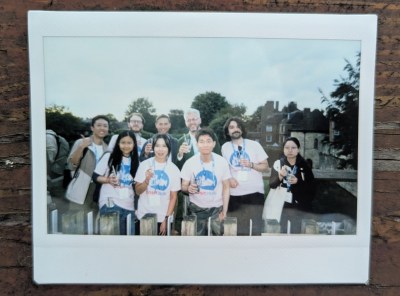
Our lab had a big presence at COSIT 2026 in York last month, with 3 short papers, 3 flash talks, and volunteering and chairing duties from our members.
-
Our Lab at WCTR 2026
Three members of our lab were in Toulouse this July for WCTR 2026, the triennial meeting of the World Conference on Transport Research Society: Yihang Bai, Howard Wong, and Dr. Manon Prédhumeau.

-
Dashboard: Speeding by Goods Vehicles on British Roads
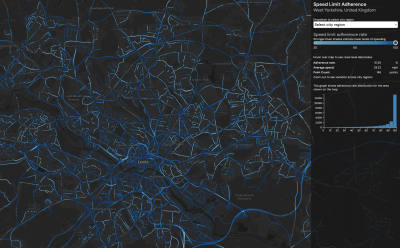
This week we have released our HASP databoard tracking speeding behaviour by goods vehicles in 13 British cities. You can view the dashboard at speeding.hasp.ac.uk. The dashboard comes through a collaboration with…
-
Our Lab at CUPUM 2025
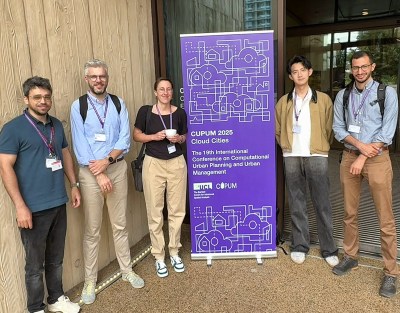
Our team attended CUPUM 2025 at UCL CASA, sharing cutting-edge work on urban digital twins, non-recurrent traffic disruption dynamics, and demand-responsive transport. The conference fostered global exchanges on urban…
-
Technical blog: Hosting Vector Tiles Securely
Mobility data is often processed in vector format, whether as road networks, points, or polygons. Vector data can store multiple attribute values (or columns) and is represented in geometries stored in formats such as…

-
Open positions
Several exciting long-term positions are available, including Research Fellow roles and PhD studentships related to the INFUZE project. Applications open now.
-
Enhancing mobility for older adults: agent-based modelling for Autonomous Mobility-on-Demand services in Winnipeg, Canada
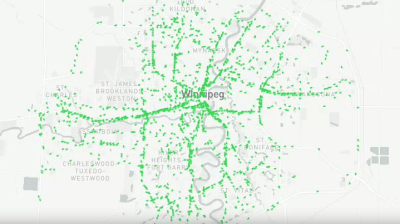
As the global population ages, addressing the transportation needs of older adults has become an urgent priority. In Canada, the demographic shift is particularly pronounced, with projections indicating that by 2030…
-
Navigating Urban Traffic Disruptions: A Study of Unplanned Disruption in the West Midlands
The study on urban traffic disruptions in the West Midlands during 2023 highlights the economic impact and spatial-temporal characteristics of these events, emphasizing the need for effective traffic management and…
