The science of human mobility
We study how people move through cities and indoor spaces with spatial data science and agent-based modelling, and apply what we learn to pressing challenges in health and sustainability.
Central Leeds, 53.80° N 1.54° W. An illustrative agent-based simulation: pedestrians on streets and footpaths and vehicles on the road network, each with its own origin and destination. Street network © OpenStreetMap contributors.
About the lab
The Mobility Science Lab is a group of researchers based at the Institute for Spatial Data Science (ISDS), in the School of Geography at University of Leeds. The group is led by Professor Ed Manley. We have strong links with the Institute for Transport Studies (ITS) at Leeds and the Centre for Advanced Spatial Analysis (CASA) at UCL.
We are involved in several research projects that span applications of mobility science to challenges relating to cities, public health, sustainability, and beyond. Despite the diverse challenge areas in which we work, there is a common approach that recognises the importance of human movement and dynamics in understanding any context.
Our expertise lies in urban and spatial data science and simulation. We make significant use of the analysis of large-scale mobility datasets, derived from a variety of sources and contexts, increasingly coupled with experimental and smaller-scale data, and aim to advance the theory and application of agent-based modelling.
- Based at
- School of Geography, University of Leeds
- Led by
- Professor Ed Manley
- Methods
- Mobility data science, behavioural modelling, agent-based simulation
- Funded by
- ESRC, European Research Council, EPSRC, Wellcome Trust, Leverhulme Trust, Alan Turing Institute
-

ReCoGNiSe (Representations of Cognitive Geography for Navigating Sustainable Neighbourhoods)
-

Healthy and Sustainable Places (HASP) Data Service
-

Consumer Data Research Centre (CDRC)
-

Predicting Hospital Infections through Mobility
-
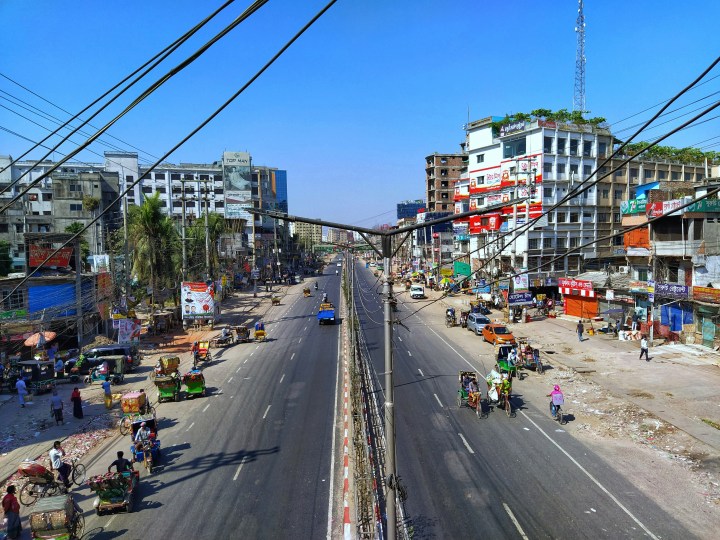
Modelling Cholera epidemics through urban form and interaction
-

Inspiring Futures for Net Zero Mobility (INFUZE)
- 2026Malleson, N. and Manley, E., 2026. Towards the Use of Foundation Models and Embeddings for Nuanced Perception and Decision-Making in Agents. Springer proceedings in complexity. Link.
- 2026Yang, Y., Liu, E., Jia, B., Cheng, S. and Manley, E., 2026. Source data for "Experienced walkability and the paradox of urban density in Chinese cities". Zenodo (CERN European Organization for Nuclear Research). Link.
- 2026Yang, Y., Liu, E., Jia, B. and Manley, E., 2026. Multi-layered segregation in urban transportation systems. EPJ Data Science. Link.
- 2026Manley, E. and McNamee, D.C., 2026. Brain-inspired representations of urban space. International Journal of Geographical Information Science, pp.1-24. Link.
- 2026Chen, L. and Manley, E., 2026. Geographic determinants of goods vehicle speeding in British cities. npj Sustainable Mobility and Transport, 3(1), p.38. Link.
- 2026Smith, P., Gould, M. and Manley, E., 2026. Document Geocoding for Inferring Spatial Familiarity Within Reddit Text (Short Paper). In 17th International Conference on Spatial Information Theory (COSIT 2026) (pp. 25-1). Schloss Dagstuhl–Leibniz-Zentrum für Informatik. Link.
News
All news →-
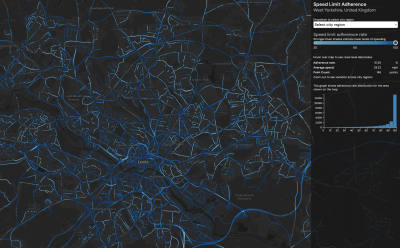
Dashboard: Speeding by Goods Vehicles on British Roads
This week we have released our HASP databoard tracking speeding behaviour by goods vehicles in 13 British cities. You can view the dashboard at speeding.hasp.ac.uk. The dashboard comes through a collaboration with…
-
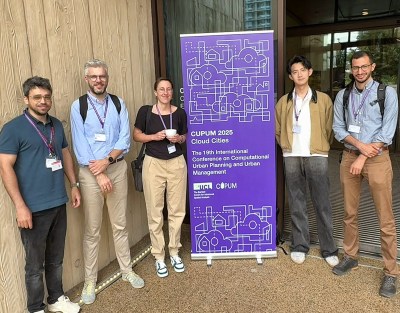
Our Lab at CUPUM 2025
Our team attended CUPUM 2025 at UCL CASA, sharing cutting-edge work on urban digital twins, non-recurrent traffic disruption dynamics, and demand-responsive transport. The conference fostered global exchanges on urban…
-
Technical blog: Hosting Vector Tiles Securely
Mobility data is often processed in vector format, whether as road networks, points, or polygons. Vector data can store multiple attribute values (or columns) and is represented in geometries stored in formats such as…

-
Open positions
Several exciting long-term positions are available, including Research Fellow roles and PhD studentships related to the INFUZE project. Applications open now.














Contact us
We welcome research collaborations and academic exchange, as well as enquiries from prospective PhD students, postdoctoral researchers and visiting scholars interested in mobility, spatial data science and simulation.
Get in touch